Ingredient notes
Why magnesium glycinate
The form of magnesium most people tend to tolerate well — and why it has become part of so many evening routines.

Magnesium has become a familiar name in the evening-routine conversation. Not because it can switch the day off for you, but because it is a mineral the body uses in many ordinary, essential processes. Magnesium glycinate is one form people often choose when they want something gentle enough to keep consistent. Here is what that actually means — and what it does not.
First, magnesium is not a sleep switch.
Magnesium is an essential mineral involved in many functions in the body, including normal muscle and nerve function. It is not a sedative, and it does not turn the day off. What it does is take part, quietly, in processes that are already happening.
It is found naturally in foods most kitchens already contain — legumes, nuts, seeds, leafy greens and whole grains — and a considered diet remains the first place to look.
A supplement is not a substitute for food, a consistent sleep schedule, or care for persistent sleep concerns. It is one small, optional input alongside the larger shape of a day.
“An evening ritual works because it gives the day somewhere to end.”
The form
What makes glycinate different?
Magnesium glycinate — sometimes labelled magnesium bisglycinate — pairs the mineral with glycine, an amino acid the body already uses.
It is commonly chosen because many people find it gentler on the digestive system than some other magnesium forms. That is a practical observation, not a hierarchy. Individual responses vary; what suits one person may not suit another.
We would not call it the best, the most bioavailable, or the form everyone should take. Those are marketing shapes. What we would say is that, for many, it is easier to tolerate — which is what makes a supplement possible to keep.

The evidence
What the research says — without the overpromise.
Research on magnesium and sleep is still developing. The literature is smaller and more mixed than the marketing around it would suggest, and much of it is preliminary.
A 2025 four-week randomised, placebo-controlled trial in 155 adults reporting poor sleep found a modest improvement in insomnia-severity scores in those taking magnesium bisglycinate, compared with placebo.
A modest improvement in a self-reported score is not the same as a cure. It does not mean magnesium glycinate resolves insomnia, or that it will work the same way for everyone. More research — longer, larger, and using objective sleep measures — is needed before stronger claims are warranted.
The practice
How it can fit an evening you actually keep.
01
Finish the day
Lower the pace where you can: dinner, a shower, a slower room.
02
Reduce the noise
Place your phone aside, soften the light, leave tomorrow’s list for tomorrow.
03
Take it as directed
If Magnesium Glycinate is right for you, take it only according to the product directions and as part of the ritual — not as a promise of perfect sleep.
04
Repeat, gently
Consistency matters more than making the evening elaborate.

Considered choices
A note on choosing supplements.
No. Individual needs and tolerances differ.
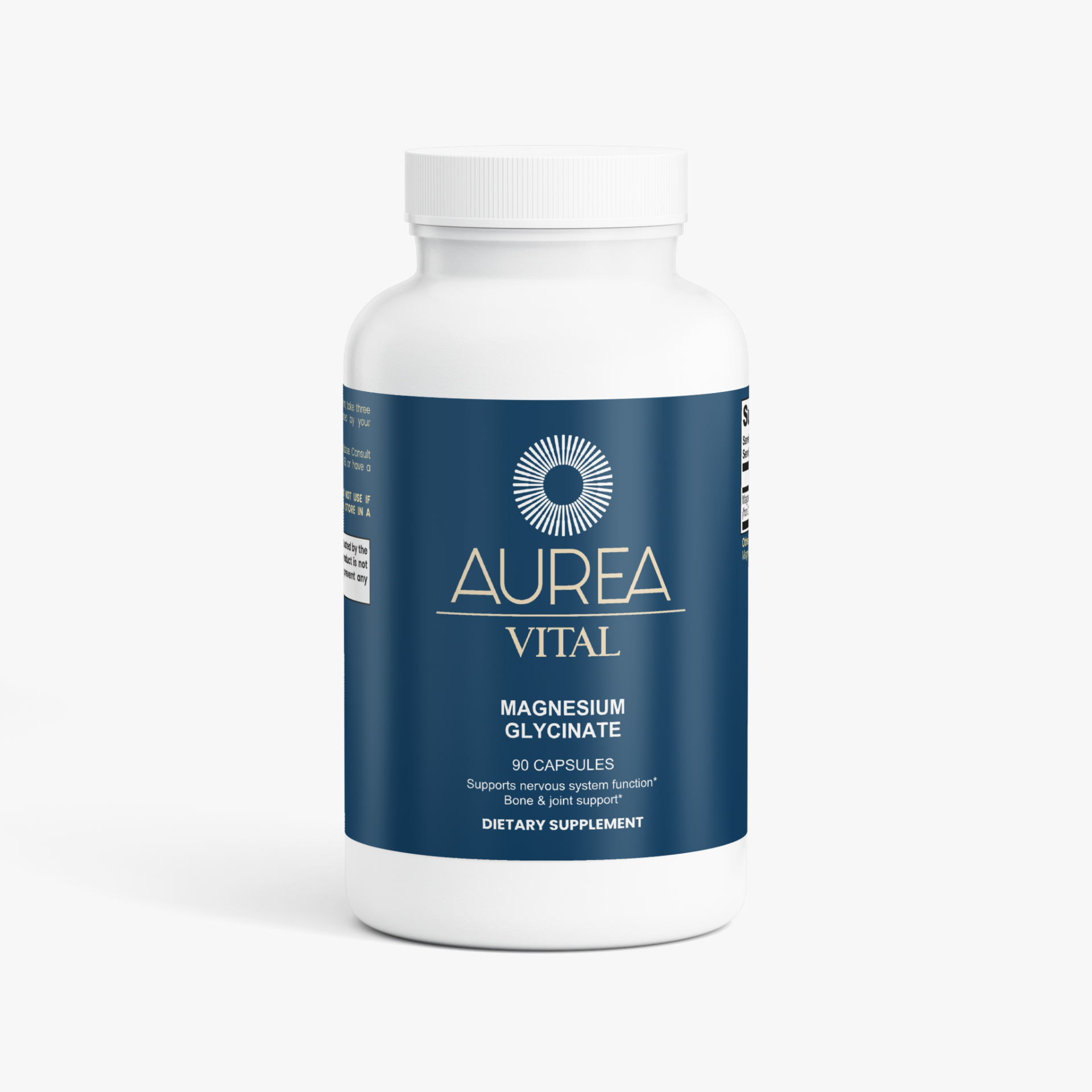
Make room for the ritual
Magnesium Glycinate
A simple, considered addition to an evening routine.
Explore Magnesium GlycinateRelated notes
An evening you actually keep
A short practice for winding down without theatrics.
Coming soon
Notes on collagen in coffee
How we tested the creamer against a real morning cup.
Coming soon
Further reading
- NIH Office of Dietary Supplements — Magnesium Fact Sheet. ods.od.nih.gov/factsheets/Magnesium-HealthProfessional
- Nature and Science of Sleep, 2025 — Magnesium Bisglycinate Supplementation in Healthy Adults Reporting Poor Sleep. pmc.ncbi.nlm.nih.gov/articles/PMC12412596
- Mayo Clinic Press — Magnesium glycinate: Is this supplement helpful for you? mcpress.mayoclinic.org — magnesium glycinate
This note is for general information only and is not medical advice. It is not intended to diagnose, treat, cure or prevent any condition. Speak with a qualified health professional about what is right for you.