Evening practice
An evening you actually keep
A short practice for winding down without theatrics.
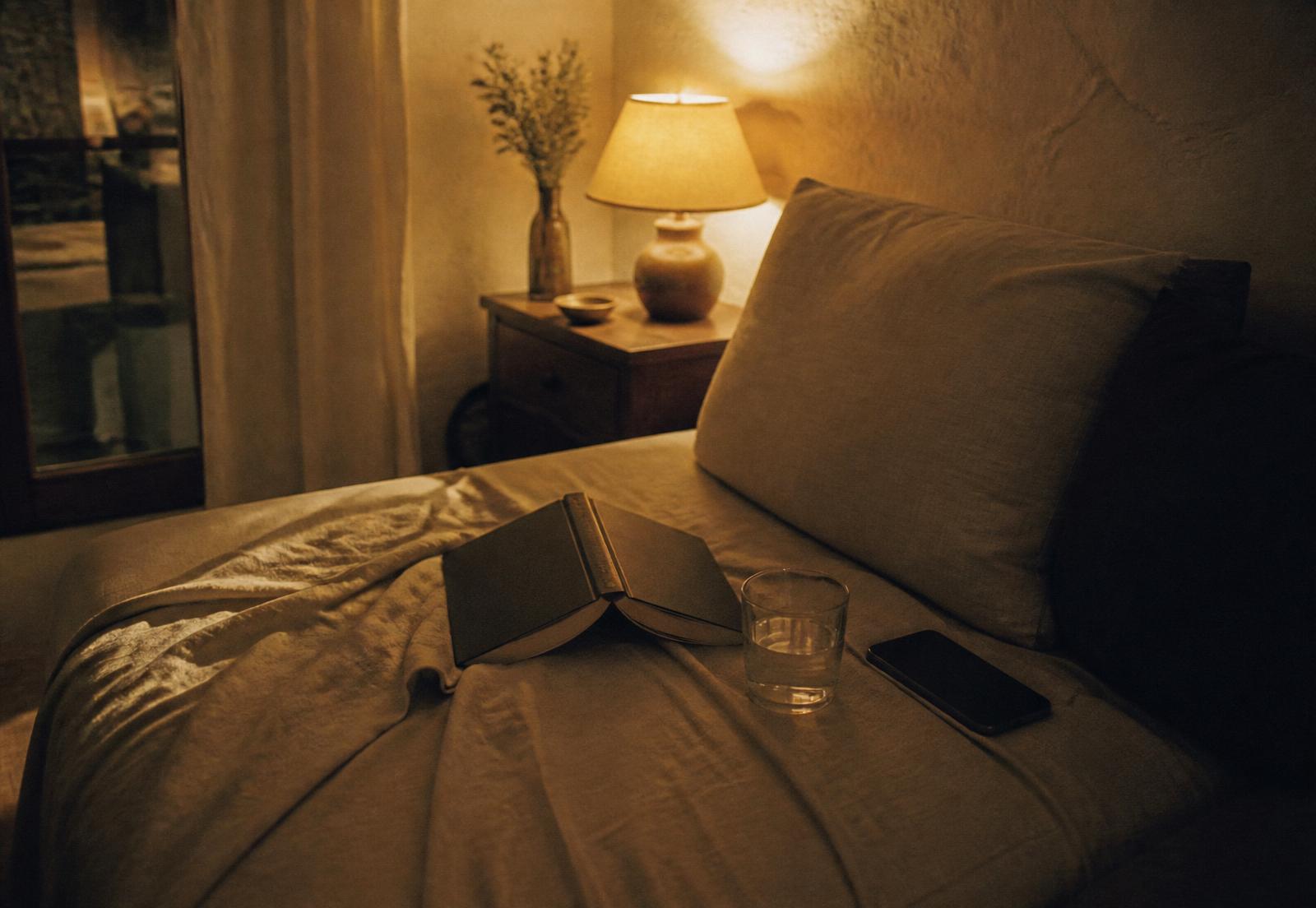
The evening does not need to become a project. It only needs a clear enough edge that the day can stop following you into bed. The most useful rituals are not elaborate; they are recognisable. A lower light. One room put back in order. A phone left somewhere else. A small sequence repeated often enough that your body begins to understand: we are done for now.
The premise
Do less, earlier.
The point of an evening practice is not to earn good sleep. It is to make a small distinction between the active part of the day and the quieter part that follows.
A routine can be five minutes on one night and longer on another. Consistency matters more than perfection — and life, shift work, parenting and care responsibilities all change what is realistic.
“Your evening does not need to be impressive. It needs to be possible.”
The practice
The minimum viable evening.
01
Close one loop
Choose one small act that tells the day it is contained: write down tomorrow's first task, clear one surface, put the work bag away, or send the message tomorrow rather than now.
Do not try to complete the whole day. Give it a place to wait.
02
Change the room
Make one environmental shift: put the phone on charge outside the bedroom or face down and out of reach, lower bright light, make the bedroom quieter, darker or cooler where possible, put on comfortable clothes.
The body notices repetition. Let the room carry some of the work.
03
Choose one quiet thing
Pick one small, screen-free activity: read a few pages, take a shower, make herbal tea, stretch gently, sit with a notebook, listen to something soft.
Choose the option that asks the least of you. Repetition is more valuable than novelty.
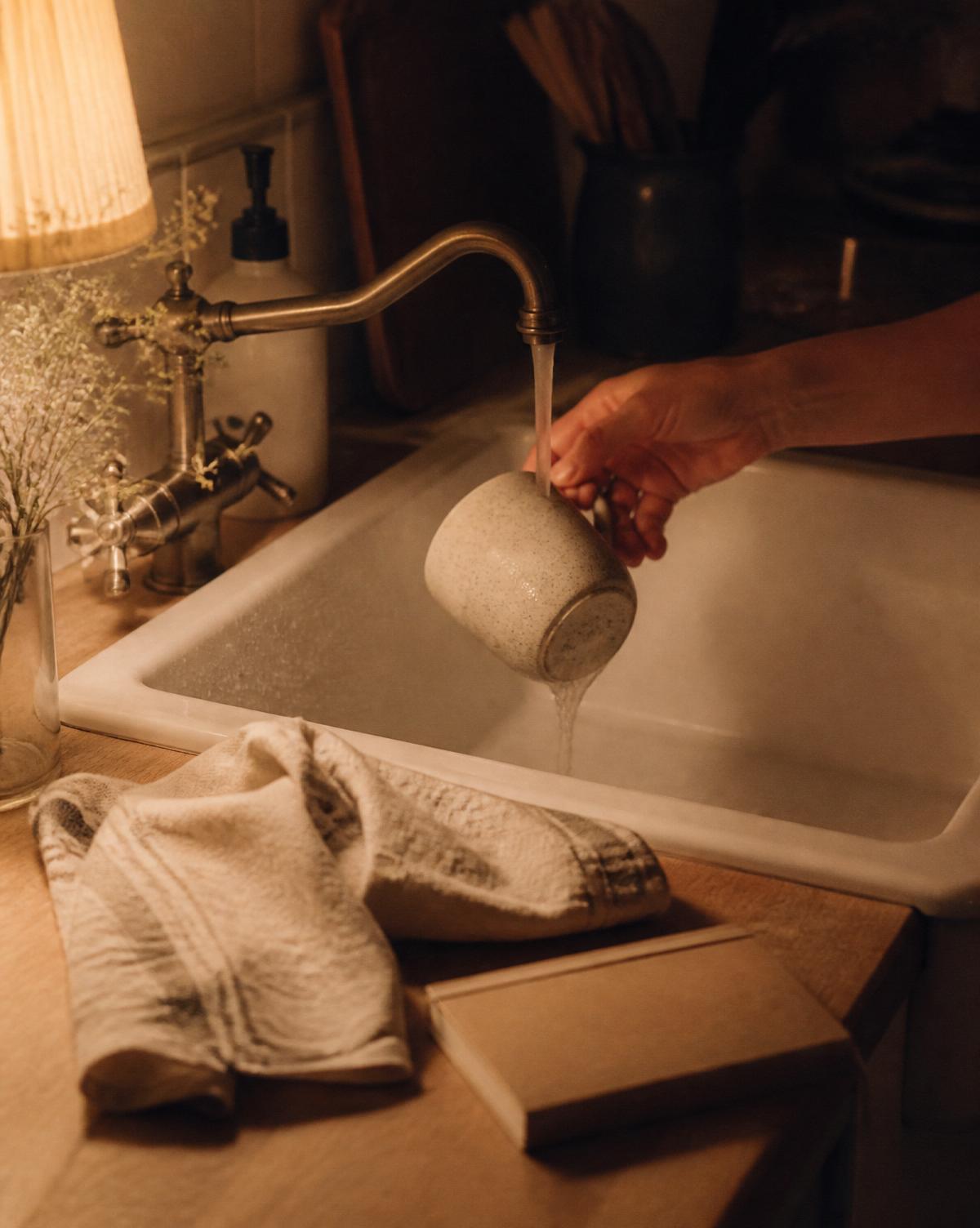
If ten minutes is all you have
A 10-minute version for real life.
- Minute 0–2Put tomorrow on paper.
- Minute 2–4Put the phone away and dim one light.
- Minute 4–7Wash up, shower or change into sleep clothes.
- Minute 7–10Read, breathe, stretch or simply sit quietly.
If you have more time, let the practice lengthen. If you do not, this is enough. Ten minutes is a practical suggestion — not a medical rule.
Honest friction
The things that make the ritual harder.
Too much unfinishedness
A mind that is still making lists has not received the message that the day has ended.
Bright, close screens
The issue is not moral failure. It is that a bright, absorbing screen makes it easy to continue the day indefinitely.
Late stimulation
Caffeine, nicotine, alcohol, heavy meals and intense exercise can affect sleep differently from person to person. Notice what changes your own evening.
A room that asks you to keep working
If possible, keep the bed for rest rather than emails, scrolling or unfinished admin.
Boundaries
What not to turn into a rule.
- Do not force a perfect bedtime.
- Do not turn rest into another metric.
- Do not add six habits at once.
- Do not assume a hard night means the ritual failed.
Some nights will still be untidy. The practice is not there to control the night. It is there to make tomorrow’s return easier.
A supportive note
When it is more than a routine problem.
If trouble falling asleep, staying asleep or functioning during the day is ongoing, speak with a qualified health professional. An evening routine can support a calmer transition, but it is not a replacement for care. Cognitive behavioural therapy for insomnia, often called CBT-I, is the treatment most strongly recommended for ongoing insomnia.
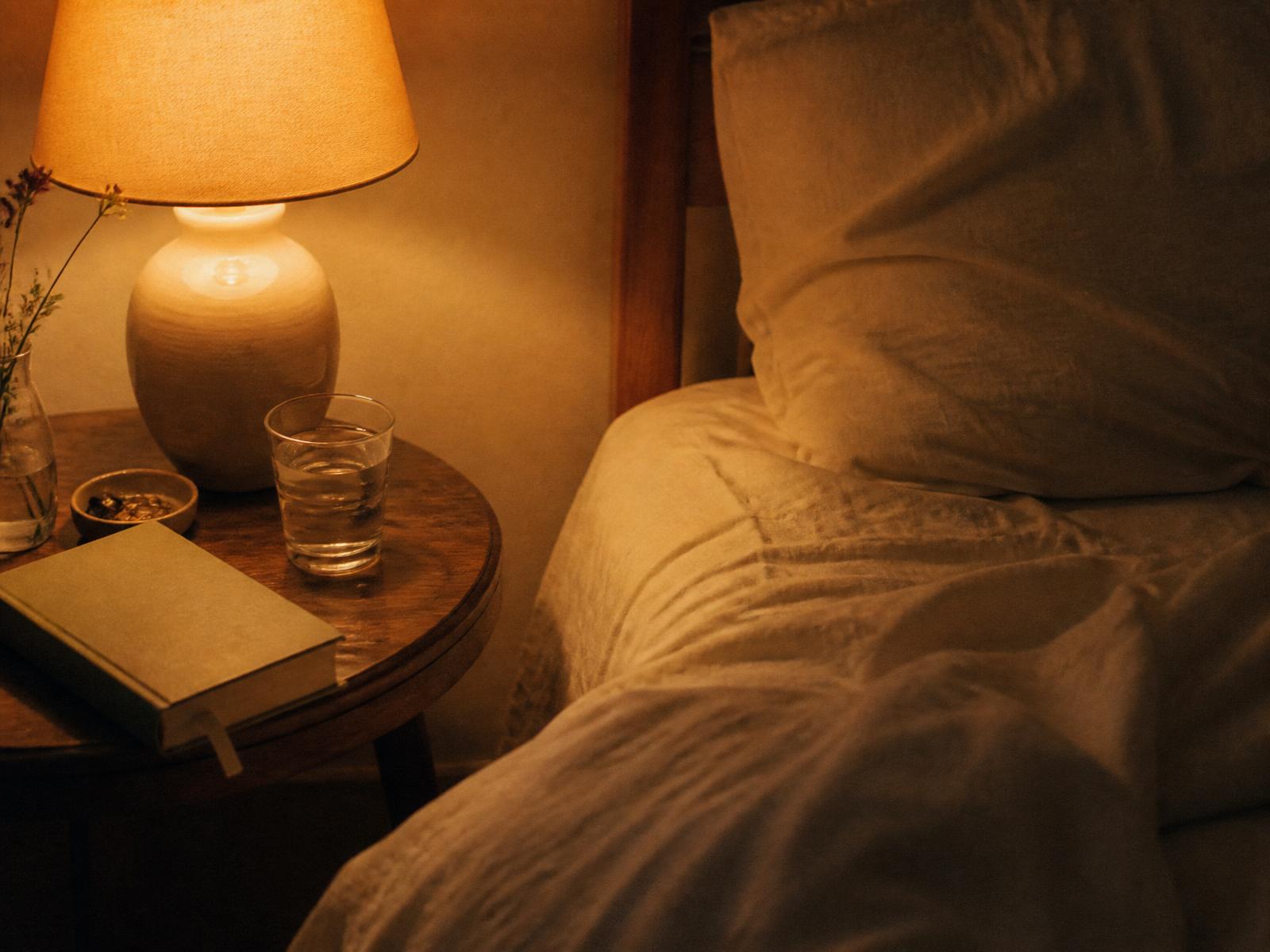
If it fits your evening
The Evening Pair
A considered addition to the ritual — not the ritual itself.
Explore The Evening PairRelated notes


Further reading
- National Heart, Lung, and Blood Institute — Healthy Sleep Habits. nhlbi.nih.gov — healthy sleep habits
- Centers for Disease Control and Prevention — About Sleep. cdc.gov/sleep/about
- National Center for Complementary and Integrative Health — Sleep Disorders and Complementary Health Approaches. nccih.nih.gov — sleep disorders
This note is for general information only and is not medical advice. It is not intended to diagnose, treat, cure or prevent any condition. Speak with a qualified health professional about what is right for you.